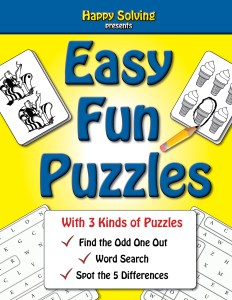
 Easy, Fun Puzzles is available at Amazon.com
This puzzle book is terrific for elderly adults who have experienced cognitive decline due to illness.
The book is filled with easy-to-solve puzzles that are made up of clear images and large print.
This book has three fun types of puzzles:
1) Word Search: There are many, fun word search puzzles in this book. The letters are all large print and there is a unique theme for each puzzle. The words only go forwards or down — there are no tricky backwards or diagonal words.
2) Find the Odd One Out: In these puzzles, the reader finds the picture that is different than the others. The images used clear, large, pleasant images which are perfect for easy viewing.
3) Spot the 5 Differences: The solver can have lots of fun finding the five differences between two almost identical pictures.
What this book doesn’t have is childish images or a kid like feel, rather it is full of easy puzzles that were designed for adults.
Caregivers will find that this is the perfect gift for adults with dementia who enjoy working on doable puzzles.
Buy Now! Easy, Fun Puzzles available at Amazon.com
Would you like to see some sample pages? Click here.
What are the Benefits of Doing Puzzles for People with Dementia or Cognitive Decline?
Numerous studies have found that people who are in the early stages of dementia or cognitive decline can significantly benefit by doing puzzles on a regular basis. This is because the puzzles provide a form of mental stimulation that can have many positive effects.
One study from the United Kingdom found that people with mild or moderate dementia enjoyed several benefits by regularly doing puzzles, and other mentally challenging activities, including:
- Improved sense of well-being;
- Improved mental functioning; and
- Improved social interactions.
Researchers have observed these benefits in well structured studies that include control groups. The use of control groups allows the researchers to accurately compare the people with dementia who have engaged in the extra mental activities and people with dementia who did not have the same opportunity to engage in additional cognitive challenges. More
 Happy Solving